

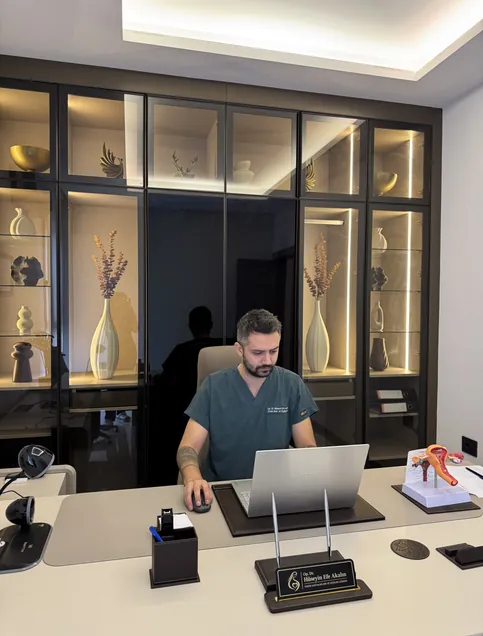

Reproductive health and family planning at the practice
Reproductive health covers the health questions of people who are planning a pregnancy, having difficulty getting pregnant or wishing to avoid pregnancy. This area includes evaluation of difficulty getting pregnant, family planning and counseling for an unplanned pregnancy.
This page has two parts. The upper part helps you find the service page that fits your situation. The guide in the lower part answers common questions, from difficulty getting pregnant to birth control, and links each topic to the related service page. The information in the guide does not make a diagnosis; it explains in which situations an evaluation is recommended.
For the practice contact details, see the contact page →
How are pregnancy planning and difficulty getting pregnant consultations conducted?
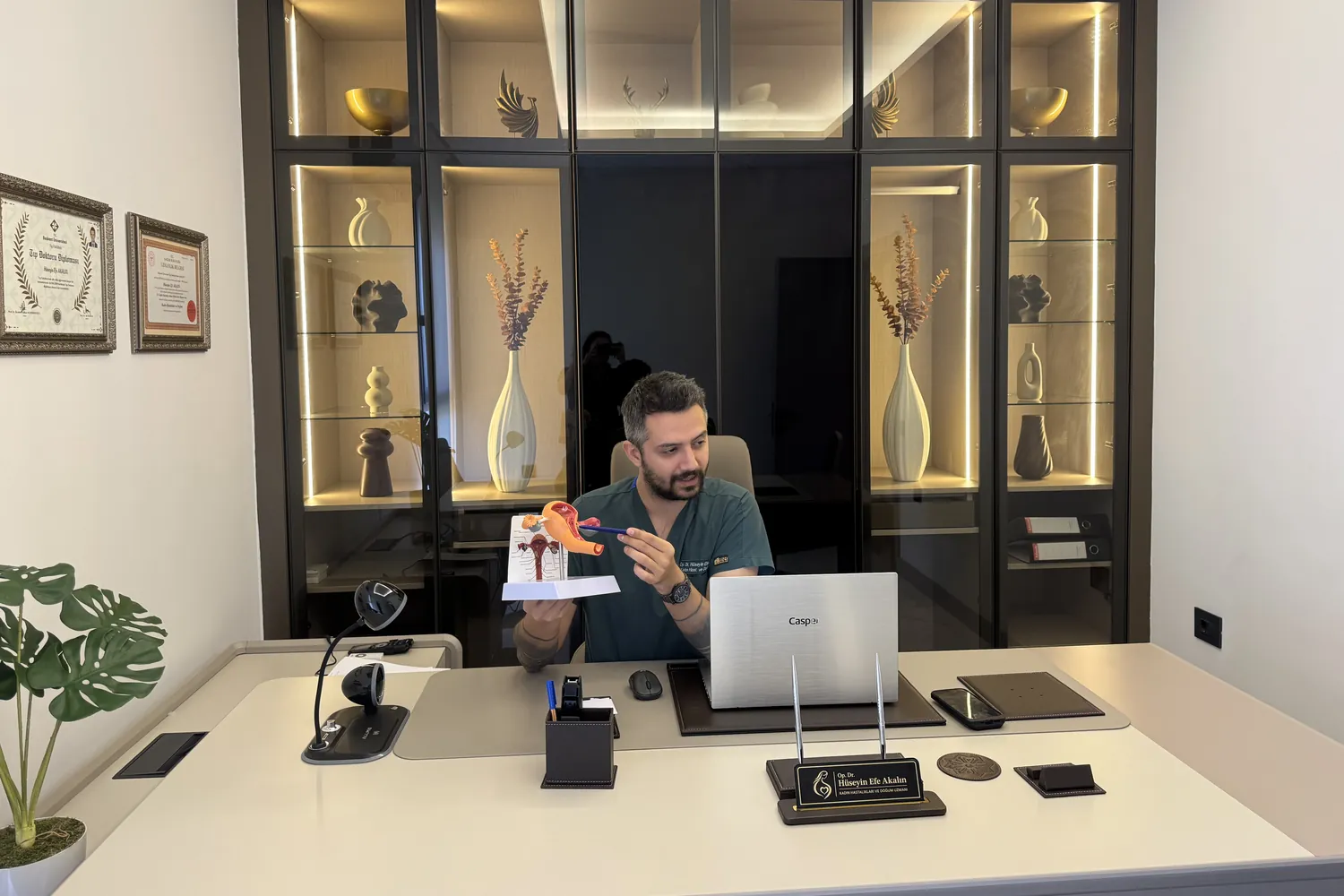
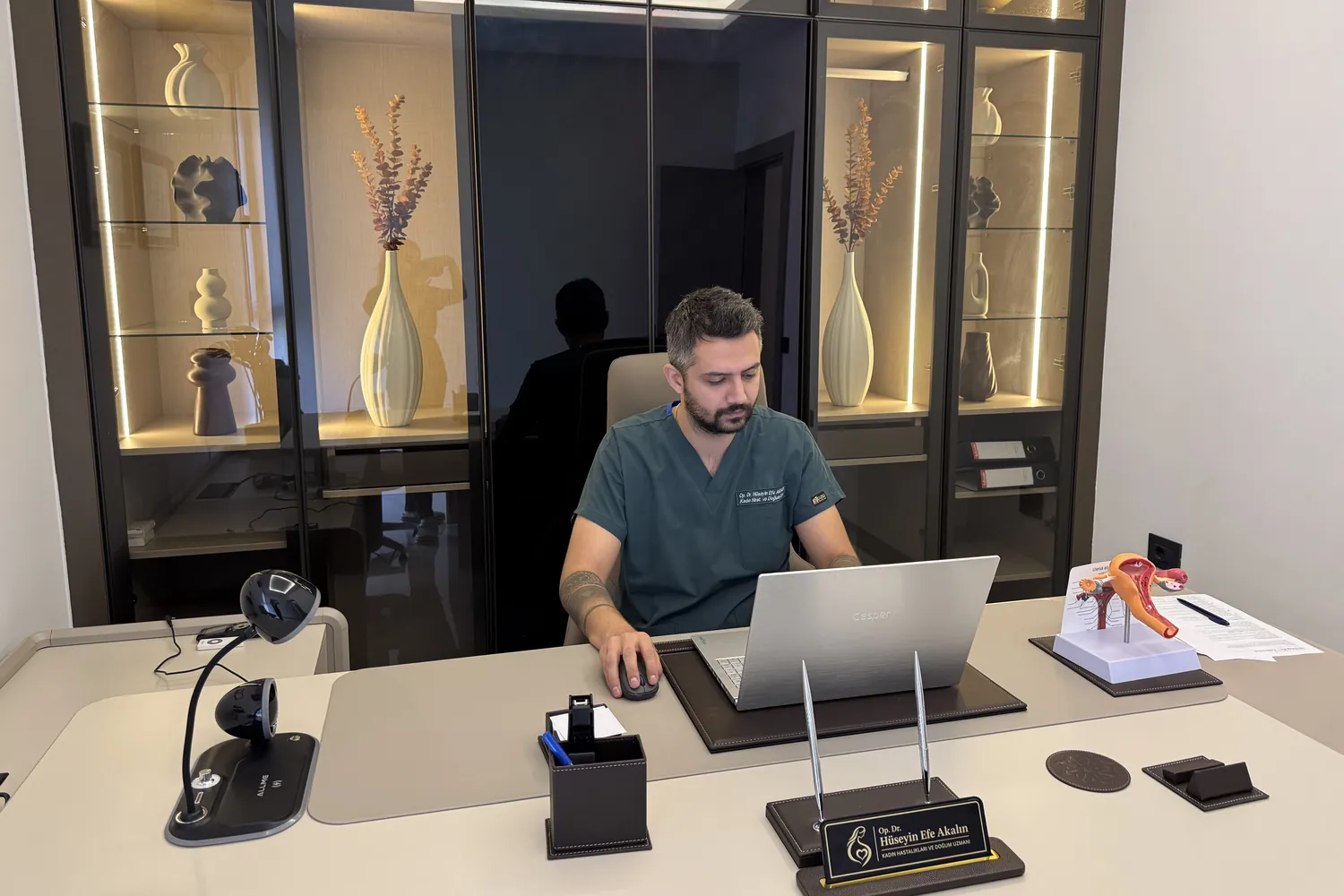
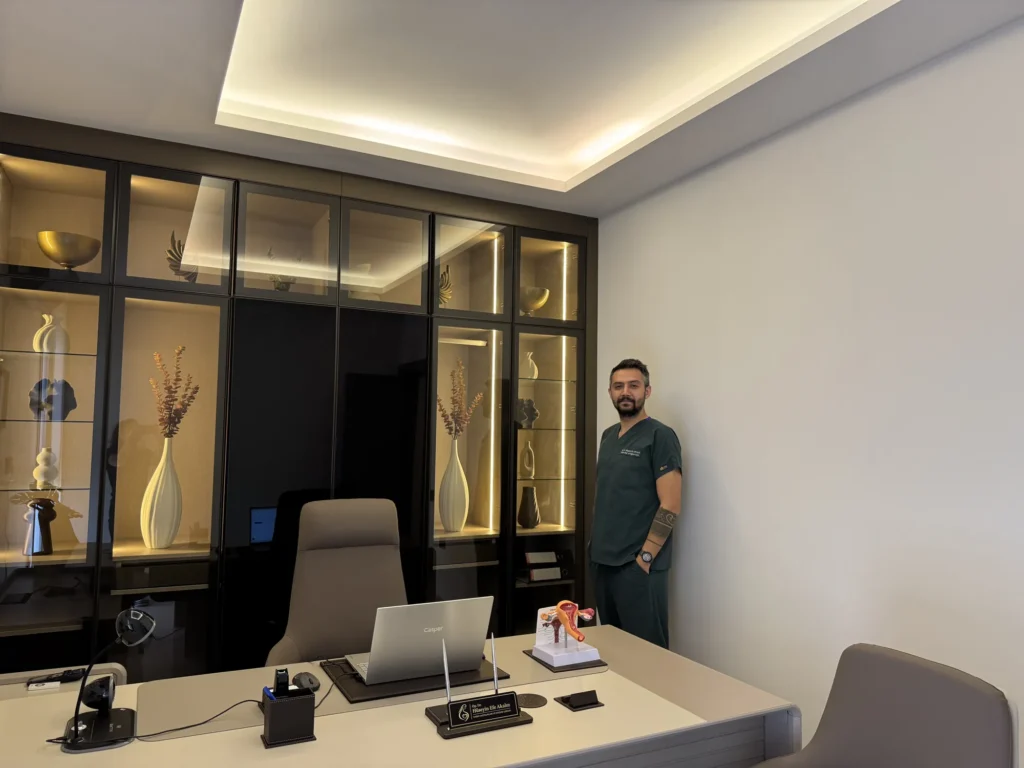
As part of obstetrics and gynecology care, Op. Dr. Hüseyin Efe Akalın holds consultations on pregnancy planning, difficulty getting pregnant and contraception at the practice in Ege Mahallesi, Kuşadası. The consultation begins by listening to your history and expectations; information is given about the duration of unprotected intercourse, the timing of intercourse, ultrasound and any tests needed. Couples who come together are seen together. A consultation on contraceptive methods takes about 15–20 minutes; the method is chosen together based on your age, the medicines you use and its suitability for you.
- Evaluation of difficulty getting pregnant: The consultation, examination, ultrasound and ovulation monitoring are carried out at the practice; if considered necessary, the option of applying to a licensed assisted reproductive treatment center is explained, depending on the woman's age and the findings. Details are on the infertility evaluation page.
- Birth control counseling: Insertion of methods such as the IUD (intrauterine device) and the contraceptive implant at the practice, as well as birth control methods such as oral contraceptives (birth control pills) and condoms, are explained on the family planning page. Permanent methods that require surgery, such as tubal ligation, are not performed at the practice; they are done in a hospital setting.
- Counseling on an unplanned pregnancy: The consultation provides information about the options and the legal framework; details are on the unplanned pregnancy counseling page. The information you share during the consultation is protected under patient confidentiality and personal data protection legislation.
- Language: Consultations and examinations can also be conducted in English.
What can you get information about in reproductive health?
In this area, you can get information about evaluation of difficulty getting pregnant, birth control counseling and information on an unplanned pregnancy. A separate page has been prepared for each of these topics.
Infertility
Family planning

Unplanned pregnancy counseling
Which page should you look at for your situation?
The table below directs you to the page that fits your situation. If your situation is not listed here, you can use the information on the contact page.
You have been trying to get pregnant for a long time and wonder when an evaluation is needed
You would like an examination and evaluation for difficulty getting pregnant
You want to learn about possible causes in women and men
You wonder how age, weight and habits affect fertility
You are planning a pregnancy and want to learn what to consider beforehand
You want to learn about birth control and contraceptive methods
You would like an appointment for an IUD, contraceptive implant or emergency contraception
You would like neutral information and counseling about an unplanned pregnancy
Your pregnancy has started and you want to begin pregnancy follow-up
You want to learn which symptoms mean you should see a doctor
Service pages and appointments
Reproductive health appointment
You can book an appointment at the practice to discuss pregnancy planning, difficulty getting pregnant or contraceptive methods. The practice is in Ege Mahallesi and is open 09:30–19:00 on weekdays and 09:30–14:30 on Saturdays.
To book, your name and a convenient day and time are enough; we will discuss your health information during the consultation.
In this guide
- When should you see a doctor about difficulty getting pregnant?
- What can cause difficulty getting pregnant in women and men?
- How do age, weight, smoking and alcohol affect fertility?
- What should you consider when planning a pregnancy?
- What are the birth control methods and how is one chosen?
- When should you see a doctor about difficulty getting pregnant or contraception?
What do people ask about reproductive health?
The most common questions are about when to seek care for difficulty getting pregnant, causes in women and men, factors that affect fertility, preparing for pregnancy and birth control methods. Each is answered below as simply as possible, based on the recommendations of health authorities and professional organizations. At the end of each section, there is a link to the service page that covers the topic in detail. This information is for general guidance; only an examination can evaluate your own situation.
When should you see a doctor about difficulty getting pregnant?
For women who want to get pregnant, a medical evaluation is recommended if pregnancy has not occurred after 12 months of regular, unprotected intercourse under the age of 35, or after 6 months at age 35 and over. Guidelines recommend that women aged 40 and over seek care without waiting. In some situations, care is sought without waiting for this period; these situations are listed in the symptoms that need medical attention section. The evaluation is planned individually at the consultation; see the infertility page.
What can cause difficulty getting pregnant in women and men?
The causes of difficulty getting pregnant can be found in the woman, the man or both; this is why the evaluation is carried out for the female and male partners together. Neither partner needs to be held solely responsible, and it is no one's fault.
In women, the most common cause is ovulation disorders. Polycystic ovary syndrome (PCOS), excess weight, premature ovarian insufficiency, and thyroid and pituitary gland problems belong to this group. Ovulation disorders are often noticed through changes in the menstrual cycle; therefore, irregular, infrequent or absent periods are an important clue for the evaluation. Past sexually transmitted infections, surgery or endometriosis can lead to blockage of the fallopian tubes, while polyps, fibroids and adhesions inside the uterus can prevent pregnancy.
In men, the most common causes are problems with sperm count, shape and motility. Blockage of the ducts that carry sperm, enlarged veins in the testicles (varicocele), ejaculation disorders, hormonal imbalances and sexual function problems are also included under this heading. In some couples, no clear cause can be found in either partner despite all the standard tests; this is called unexplained infertility, and it is also a matter for medical evaluation.
Findings in either partner are a matter for medical evaluation. If IUI or IVF is considered after the evaluation, what these methods involve is explained in the evaluation of difficulty getting pregnant and next options section. In vitro fertilization (IVF/ICSI) can only be performed at licensed assisted reproductive treatment centers.
To plan the evaluation as a couple, you can contact the practice by phone or WhatsApp.
How do age, weight, smoking and alcohol affect fertility?
Age, body weight, smoking and alcohol can affect fertility in both women and men. In women, ovarian reserve and egg quality naturally decline with age; this is why the times for seeking care are set according to age. In men, sperm characteristics can also change with age, but this change is not as sharp as in women.
A body mass index of 30 or over, being markedly underweight and doing excessively heavy exercise can affect ovulation. For this reason, it is recommended that weight is also assessed as part of the history in women planning a pregnancy. Smoking and secondhand smoke reduce the chance of getting pregnant in women; they can also speed up the loss of follicles in the ovaries and bring forward the age of menopause. In men, smoking is also associated with a decrease in sperm count and quality. Excessive alcohol consumption can increase the time it takes to get pregnant; stopping alcohol completely is recommended for those planning a pregnancy.
In men, smoking, heavy alcohol consumption and cannabis can adversely affect sperm count, motility and quality. Severe stress can also lead to loss of sexual desire and can adversely affect ovulation and sperm production. This information is not meant to blame anyone, but to recognize the factors that can be changed. It should be remembered that in couples, not only the woman's but also the man's age and habits can affect the chance of getting pregnant. These factors are also considered together as part of the history during the evaluation.
You can find how your age and history change the timing of the evaluation in the when the evaluation of difficulty getting pregnant starts section.
What should you consider when planning a pregnancy?
Preconception counseling is a preventive evaluation done before getting pregnant to support the health of mother and baby and to identify possible risk factors in advance. It is recommended to seek it when you start thinking about pregnancy, before you stop using contraception.
The consultation covers medical, reproductive and family history. It is important to bring thyroid, autoimmune and metabolic diseases under control before pregnancy. Damage that past sexually transmitted and pelvic infections may have caused to the reproductive organs is also reviewed. The structure of the uterus and ovaries can also be assessed with a gynecological examination and pelvic ultrasound. If there is a family history of inherited disease, developmental delay, early menopause or hereditary cancer, referral for genetic counseling may be considered. This consultation is not for the woman alone; couples can come together to discuss their pregnancy plans. The medicines and herbal supplements you use are also reviewed before pregnancy; a herbal product being "natural" does not mean it is harmless.
The following topics stand out in preconception guidelines:
- Folic acid: Folic acid supplementation started before pregnancy is reported to reduce the risk of neural tube defects in the baby. Starting it before pregnancy is recommended; the dose and duration are determined with your doctor. For details, see the pregnancy follow-up page.
- Vaccines: For people who are not immune to rubella and chickenpox, vaccination before pregnancy is recommended. Immunity to hepatitis B and tetanus is also assessed. The doctor plans the timing of vaccines.
- Infection screening: It is important to screen for sexually transmitted infections such as hepatitis B, syphilis and HIV before pregnancy and to plan treatment if needed.
- Chronic conditions: For people with conditions that require ongoing medication, such as diabetes, hypertension and epilepsy, adjusting medicines before pregnancy may be considered; the doctor plans this.
- Weight: Being very underweight before pregnancy can make it harder to get pregnant; obesity can also more often lead to fertility problems and various complications in pregnancy.
Noting down your menstrual pattern, the medicines you use, past surgeries and infections, and any inherited diseases in your family before the consultation makes it easier. You can also ask your doctor which changes in lifestyle, weight or diet are needed to improve your chance of getting pregnant.
This is general guideline information; your doctor determines which of these you need. If you are having difficulty getting pregnant, see the evaluation of difficulty getting pregnant; once pregnancy has started, see the pregnancy follow-up page for the first visits.
What are the birth control methods and how is one chosen?
Birth control is the set of methods that allow people to plan the timing and spacing of pregnancies. Methods are grouped as hormonal methods, intrauterine devices, barrier methods, permanent methods, and natural and traditional methods. The method is chosen according to age, health history and personal preference. The choice of method is discussed individually at the consultation; for the methods provided at the practice, see the family planning page, and for information and counseling about an unplanned pregnancy, see the related page.
When should you see a doctor about difficulty getting pregnant or contraception?
In an emergency, call 112 or go to the nearest emergency department.
If you have severe pelvic pain, high fever, or bleeding that does not stop or is heavy after HSG, an ultrasound-guided tubal check or treatment to stimulate ovulation, see a doctor without delay. In the following situations, an examination is recommended:
Severe pain and fever
Heavy bleeding
- If the time set for your age (12 months under the age of 35, 6 months at age 35 and over) has passed, or if you are 40 or over
- If you want to get pregnant and your periods are irregular, infrequent or absent
- If you have a history of uterine, tubal or endometriosis problems, or your male partner has a known reproductive problem
- If you have a history of chemotherapy or radiotherapy, or a risk of early menopause
- If difficulty getting pregnant comes with severe menstrual cramps, chronic pelvic pain or pain during intercourse
- If you are planning a pregnancy and have a chronic condition such as thyroid disease, diabetes, hypertension or epilepsy, or take medicines regularly
- If you need emergency contraception after unprotected intercourse; since these methods are limited to a certain time after unprotected intercourse, you are advised to consult a healthcare facility without delay if needed
For bleeding, pain and discharge during pregnancy, see the emergency section of the pregnancy guide. For complaints about your menstrual pattern, the Gynecology and Women's Health page can guide you. For the evaluation of difficulty getting pregnant and warnings after treatment, see the infertility page; for side effects that develop while using a contraceptive method, see the family planning page.
Frequently Asked Questions
Is difficulty getting pregnant a disease?
According to the definition of the American Society for Reproductive Medicine (ASRM), infertility is a disease or medical condition characterized by the inability to achieve a pregnancy based on medical history, age and diagnostic tests. The need for medical intervention or donor gametes is also included in this definition. In other words, it is a matter for medical evaluation; it should not be seen as a personal shortcoming.
When and why is preconception counseling done?
Couples planning a pregnancy are advised to seek it when they start thinking about pregnancy, before they stop using contraception. The consultation covers medical, reproductive and family history; medicines in use and chronic conditions such as thyroid disease are reviewed. A preconception evaluation helps identify possible risks before pregnancy.
Are herbal supplements harmless before getting pregnant?
Not always. A herbal product being "natural" does not mean it is harmless; some supplements used without supervision can adversely affect reproductive health and hormonal balance. You are advised to tell your doctor about the medicines, vitamins and herbal products you use before pregnancy and to review them together. For this reason, it is advisable to consult your doctor before starting a supplement.
Which habits affect fertility before pregnancy?
In women, smoking and secondhand smoke can reduce the chance of getting pregnant; excessive alcohol consumption can increase the time it takes to get pregnant. In men, smoking, heavy alcohol consumption and cannabis can adversely affect sperm count, motility and quality. A very low or very high body mass index can also affect ovulation.

Reviewed by
Op. Dr. Hüseyin Efe AKALIN
Obstetrics and Gynecology Specialist
Başkent University Faculty of Medicine (2019) · Ankara Bilkent City Hospital, specialty training (2020–2024)
This page has been reviewed by Op. Dr. Hüseyin Efe Akalın. Last updated: October 29, 2026
This page is for information only and does not replace an examination or diagnosis.
Sources
The information on this page is mainly based on publications by the following institutions and professional organizations. For information specific to Türkiye, consult your doctor.
- American Society for Reproductive Medicine (ASRM), Definition of infertility: a committee opinion
- American Society for Reproductive Medicine (ASRM), Fertility evaluation of infertile women: a committee opinion
- American Society for Reproductive Medicine (ASRM), Optimizing natural fertility: a committee opinion
- American College of Obstetricians and Gynecologists (ACOG), Evaluating Infertility
- American College of Obstetricians and Gynecologists (ACOG), Treating Infertility
- National Institute for Health and Care Excellence (NICE), Fertility problems: assessment and treatment (NG257)
- National Health Service (NHS), Infertility
- National Health Service (NHS), Intrauterine insemination (IUI)
- National Health Service (NHS), In vitro fertilisation (IVF)
- World Health Organization (WHO), Guideline for the prevention, diagnosis and treatment of infertility
- World Health Organization (WHO), Medical eligibility criteria for contraceptive use (Turkish edition)
- U.S. Centers for Disease Control and Prevention (CDC), U.S. Selected Practice Recommendations for Contraceptive Use, 2024
Practice address, directions and appointments
To book an appointment, you can call, send a WhatsApp message or use the form on the contact page. Consultations are by appointment.
Address
Ege Mah. Turgut Özal Bulv. Cadde Residence A2 Blok Kat: 3 Daire: 10
09400 Kuşadası/Aydın
Building entrance and parking
Directions and map
The practice is on the 3rd floor of Cadde Residence, Block A2, on Turgut Özal Boulevard in Ege Mahallesi. From the ring road (Çevreyolu), take the right turn just above the supermarket and enter the building through the barrier gate; the building has an elevator. Parking is available around the entrance and on the road above, and the ring road, served by all bus lines, is about 50 meters away. The building entrance and the elevator are suitable for wheelchairs and strollers.