

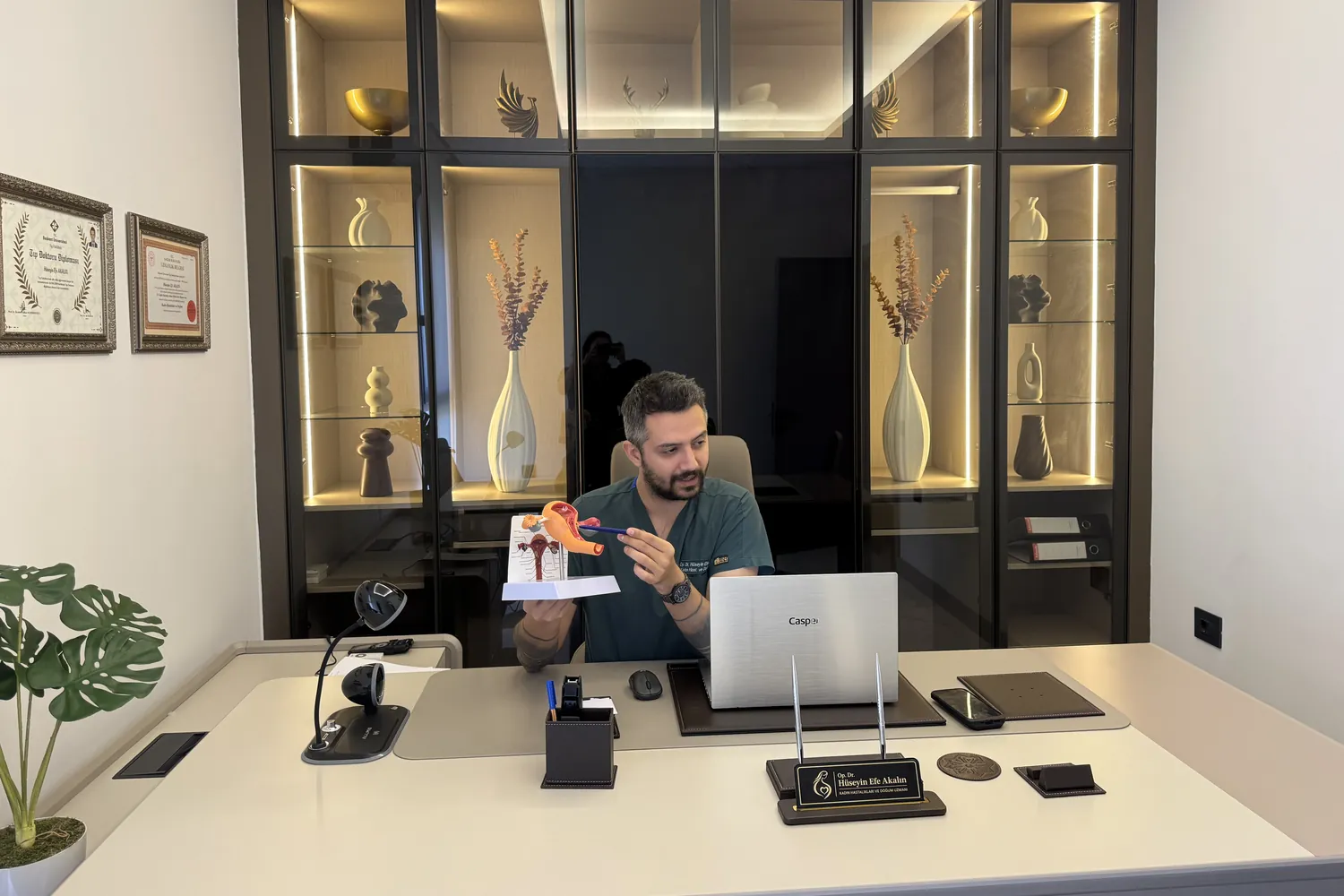
Family Planning: Birth Control Methods and Counseling

Op. Dr. Hüseyin Efe Akalın showing a uterus model at the consultation desk

Infertility

Briefly explains when to seek help for difficulty getting pregnant and the initial evaluation carried out at the practice.
Go to page
Op. Dr. Hüseyin Efe Akalın working at his desk in the consultation room

Family planning

Briefly describes birth control counseling and the methods provided at the practice (IUD, implant).
Go to page

Op. Dr. Hüseyin Efe Akalın in the consultation room with lit display cabinets behind

Unplanned pregnancy counseling

Introduces neutral information and the counseling process for an unplanned pregnancy; details are covered on the relevant page.
Go to page

Information and counseling to choose the birth control method that suits your health and your goals.

Family planning is the evaluation of methods for preventing pregnancy and timing pregnancy, together with the person's health and expectations. There is no single right method for everyone. At the practice in Kuşadası, Op. Dr. Hüseyin Efe Akalın offers counseling to decide together on the method that suits you.

Who is it for?

  • People who want to choose a birth control method or change their method
  • People considering having an IUD or implant inserted or removed
  • People who cannot use some methods because of a medical condition; alternatives are offered to them
  • People who want information on emergency contraception after unprotected intercourse or method failure
  • People planning contraception for the postpartum period and while breastfeeding
Op. Dr. Hüseyin Efe Akalın at his desk with a uterus model on it
Clinic waiting area and reception desk with large windows

When should you see a doctor while using an IUD?

If any of these symptoms occur, you are advised to see a doctor as soon as possible. In an emergency, call 112 or go to the nearest emergency department.

Severe pain
Severe cramping, lower abdominal or pelvic pain.
Fever and discharge
High fever, abnormal or foul-smelling vaginal discharge.
Bleeding
Heavy or prolonged vaginal bleeding.
Strings and pregnancy
Not being able to feel the IUD strings, or suspected pregnancy.

At the practice

The method that suits you is discussed after evaluating together your age, the medications you take and whether you can use a method regularly.

  • IUD: IUD insertion and removal are done at the practice.
  • Implant: The contraceptive implant is provided at the practice; the contraceptive injection is not offered.
  • Emergency contraception: If considered appropriate, a prescription is written. Emergency contraception pills should be taken as early as possible.
  • Permanent methods: Permanent methods such as tubal ligation are performed surgically in a hospital, not at the practice.
  • Language: The consultation can also be held in English.

Appointment for family planning counseling

You can request an appointment to discuss choosing a method or postpartum planning during an examination. The practice is in Ege Mahallesi; it is open weekdays 09:30⁠–⁠19:00 and Saturdays 09:30⁠–⁠14:30.

For an appointment, your name and a convenient day and time are enough; we will discuss your health information during the examination.

Frequently Asked Questions

Which birth control method is right for me?

Your health history, medical conditions and future pregnancy plans are evaluated together. The option that suits you is decided together during the examination.

Cramping and aching may be felt during and right after the procedure. There are options to reduce the pain; your doctor will explain how it is done at the practice.

Yes. After the IUD is removed, the ability to get pregnant returns to what it was before. If you do not want to become pregnant, it is advisable to discuss your next method before the removal.

No. IUDs and birth control pills do not protect against sexually transmitted infections (STIs); condom use is recommended to reduce the risk.

This page was reviewed by Op. Dr. Hüseyin Efe Akalın. Last updated: October 29, 2026

The information on this page is based on recommendations from the US CDC (Medical Eligibility Criteria and Selected Practice Recommendations), the NHS, ACOG and FSRH, and on Ankara University open course materials. It is for information only and does not replace an examination or diagnosis.